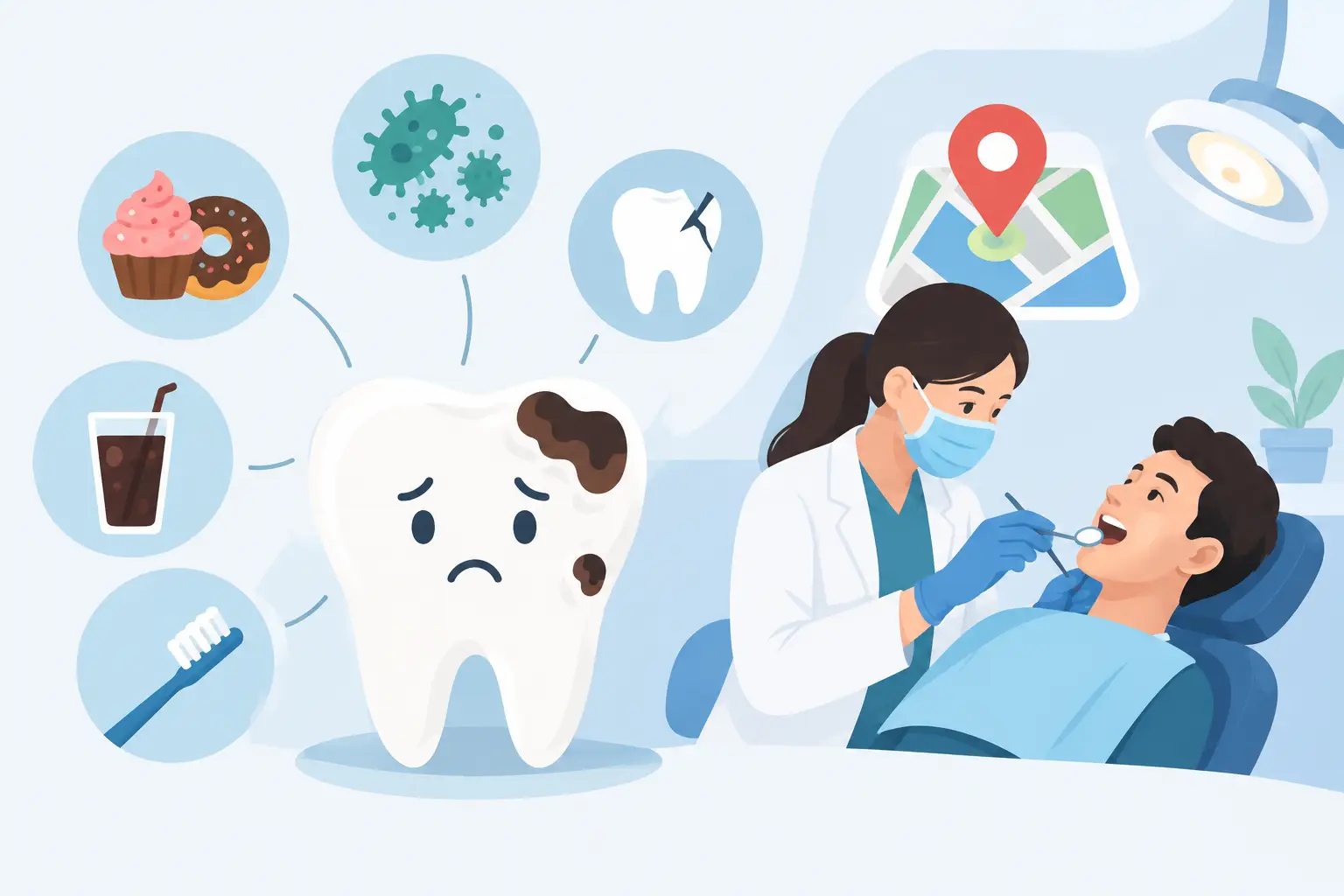
What Causes Recurring Cavities and Treatment Near Me?

A cavity that returns after a filling can feel discouraging, especially when you brush carefully and keep your regular appointments. If you are searching for what causes recurring cavities and treatment near me, the most helpful answer is rarely just “brush more.” Recurring decay usually signals that something in the mouth, diet, daily routine, bite, or overall health needs closer attention.
At Kingston Family Cosmetic Dentistry, the goal is to relieve the immediate problem while looking for the conditions that allowed decay to develop or return. That means protecting as much healthy tooth structure as possible and helping you build a plan that supports your smile long after treatment is complete.
Why cavities can keep coming back
A cavity forms when oral bacteria feed on sugars and starches, producing acids that weaken tooth enamel. Over time, the enamel breaks down and decay reaches deeper into the tooth. The process is common, but it is not always simple. Two people can follow similar brushing routines and have very different cavity risks.
Sometimes new decay develops on a different tooth. In other cases, decay forms at the edge of an older filling or crown. This is often called recurrent decay. Dental materials are designed to last, but fillings and crowns can eventually wear, chip, or develop tiny gaps at their margins. Bacteria can enter these areas, where a toothbrush cannot reach effectively.
A restoration is not necessarily the reason a cavity returned. It may be a sign that the tooth, the bite, saliva, or the bacterial environment in the mouth needs attention. Finding that distinction matters because simply replacing a filling without addressing the cause can lead to the same frustrating cycle.
Dry mouth changes the mouth’s natural defenses
Saliva does much more than keep your mouth comfortable. It rinses away food particles, helps neutralize acids, and provides minerals that support enamel repair. When saliva flow is reduced, cavities can develop more quickly, including around existing dental work and near the gumline.
Dry mouth may be related to common prescription medications, dehydration, mouth breathing, certain health conditions, radiation therapy, or normal aging. People who wake with a dry mouth, need water frequently while eating, or have sticky-feeling saliva should mention it during a dental visit. Treating dry mouth often involves more than drinking extra water. Your dentist may recommend changes to home care, fluoride support, saliva-stimulating strategies, and closer monitoring.
Frequent snacking can matter more than one dessert
The amount of sugar you eat matters, but the frequency of exposure is often just as significant. Sipping sweetened coffee, soda, sports drinks, juice, or flavored sparkling water over several hours repeatedly bathes teeth in acid. Frequent grazing on crackers, dried fruit, candy, or other carbohydrates has a similar effect.
Teeth need time between meals to recover from an acidic environment. A patient who has dessert with dinner may have a lower cavity risk than someone who takes small sips of a sweet drink all afternoon. This does not mean you must eliminate every favorite food. It means timing, hydration, and rinsing with water can make a meaningful difference.
Brushing alone may not reach high-risk areas
Even excellent brushing can miss the tight spaces between teeth, the grooves in back molars, and the edges of older restorations. Daily flossing or another dentist-recommended interdental cleaner is essential because many cavities begin where toothbrush bristles cannot reach.
Technique also matters. Brushing too quickly, using a worn brush, or rinsing immediately after using fluoride toothpaste may reduce the protection you receive. For children and adults with repeated cavities, a dentist may recommend a higher-fluoride toothpaste, in-office fluoride applications, sealants for vulnerable chewing surfaces, or a personalized schedule for preventive visits.
Gum recession, enamel weakness, and bite stress can contribute
When gums recede, softer root surfaces become exposed. Roots do not have the same hard enamel covering as the crown of a tooth, so they can decay more easily. Gum disease, aggressive brushing, and natural changes over time can all contribute to recession.
Acid reflux, frequent vomiting, and acidic beverages can soften enamel as well. Clenching or grinding may not directly cause a cavity, but it can crack teeth, wear down restorations, and create areas where bacteria can collect. A careful exam can reveal whether these concerns are part of the pattern.
Recurring cavities: treatment near me should start with a diagnosis
When a tooth hurts, it is tempting to look only for the fastest available filling. Prompt care is valuable, particularly for pain, swelling, a broken tooth, or sensitivity that is getting worse. Still, lasting treatment begins with determining how far the decay has progressed and why it happened.
A thorough evaluation may include an examination, digital X-rays when appropriate, a review of existing fillings and crowns, gum health assessment, and a conversation about your medical history, medications, diet, and home care. This wider view is especially helpful for patients who have had several cavities in a short period or decay repeatedly around dental work.
Early enamel changes can sometimes be managed without drilling through a preventive plan focused on fluoride, mineral support, dietary habits, and better plaque control. Once a cavity has created a hole in the tooth, the decayed portion generally needs to be removed and restored. The least invasive option depends on the size and location of the cavity and how much healthy tooth remains.
Conservative treatment options for damaged teeth
Small to moderate cavities are commonly treated with tooth-colored composite fillings. These restorations blend naturally with the tooth and often allow the dentist to preserve more of the remaining structure than older approaches.
When decay is larger, or when a tooth has cracks and extensive old filling material, an inlay, onlay, or crown may be the better way to protect it from further fracture. If decay reaches the pulp, where the tooth’s nerve and blood supply are located, root canal treatment may be needed to save the natural tooth. Extraction is considered only when a tooth cannot be predictably restored.
Advanced technology can support a more comfortable, precise experience in the right circumstances. Laser dentistry may be used for selected soft-tissue and periodontal needs, helping with precision and healing. The exact treatment should always be based on what protects the tooth and your long-term oral health, not on a one-size-fits-all approach.
How to stop the cycle after treatment
A new filling repairs a damaged area, but prevention protects the rest of the tooth and the teeth around it. Your plan may include professional cleanings at an interval matched to your risk level, fluoride treatments, sealants, dry-mouth management, and periodic X-rays to catch changes before they become painful.
At home, use fluoride toothpaste twice daily and clean between your teeth every day. If you snack or drink anything acidic or sweet, follow it with water when you can. Avoid brushing immediately after acidic foods or drinks, since softened enamel can be more vulnerable to abrasion. Waiting about 30 minutes gives saliva time to begin neutralizing the acid.
For children, recurring cavities may reflect challenges with brushing, frequent snacks, deep molar grooves, or a need for extra fluoride protection. For older adults, dry mouth, gum recession, medications, and older dental work can shift cavity risk quickly. Each stage of life calls for a slightly different prevention strategy.
When recurring cavities need prompt attention
Do not wait for a routine cleaning if you have toothache, facial swelling, a pimple-like bump on the gums, pain when biting, lingering sensitivity to hot or cold, or a filling that feels broken. Decay can progress quietly, and early treatment is usually simpler, more comfortable, and more conservative.
If dental anxiety has kept you from seeking care, you are not alone. A compassionate dental team can explain what they see, discuss options clearly, and help you move at a pace that feels manageable. Sedation options may also be appropriate for some patients, depending on their health history and treatment needs.
A recurring cavity is not a personal failure. It is useful information from your mouth: something needs more support. With a careful diagnosis and a prevention plan built around your individual risks, you can move from repeated repairs toward a healthier, more comfortable smile.